Production Inference
Models that must answer in milliseconds, at the edge, beside the users they serve. Inference is on track to become the majority of all AI compute — and it rewards being close.
Recommendation / search / agents · real-time APIs EliteMicro ServicesDecentralized Data Centers
The Autonomy Engine doesn't suggest — it acts. It runs the floor of every Cell and the fabric of the Mesh: balancing workloads, tuning cooling, healing faults, and routing traffic to the nearest healthy node — all inside your policy, under human command.
A control plane rides every node. Local models watch power, thermals and workload in real time and act in the loop — tuning cooling, trimming energy draw, and easing wear so hardware runs cooler and lasts longer. You set intent and guardrails; the Engine keeps the site inside them, efficient by default — one policy, every floor.
"Autonomous" is a loaded word. Here is exactly where the Engine acts on its own, and exactly where a human stays in command. The toil is automated; the accountability never is.
Design stance echoes industry guidance: operators should not cede full control to algorithms without safeguards, and human oversight must be retained across the stack (source: Uptime Institute, 2025). Human error is linked to roughly 66–80% of data-center downtime — the case for automating toil, not accountability (source: Uptime Institute, 2024).
Find the megawatt. We site a Cell beside power that already exists — hydro, cold air, a stranded feed — so energizing is a matter of weeks, not a years-long fight for grid capacity in an overloaded region.
Days · Not years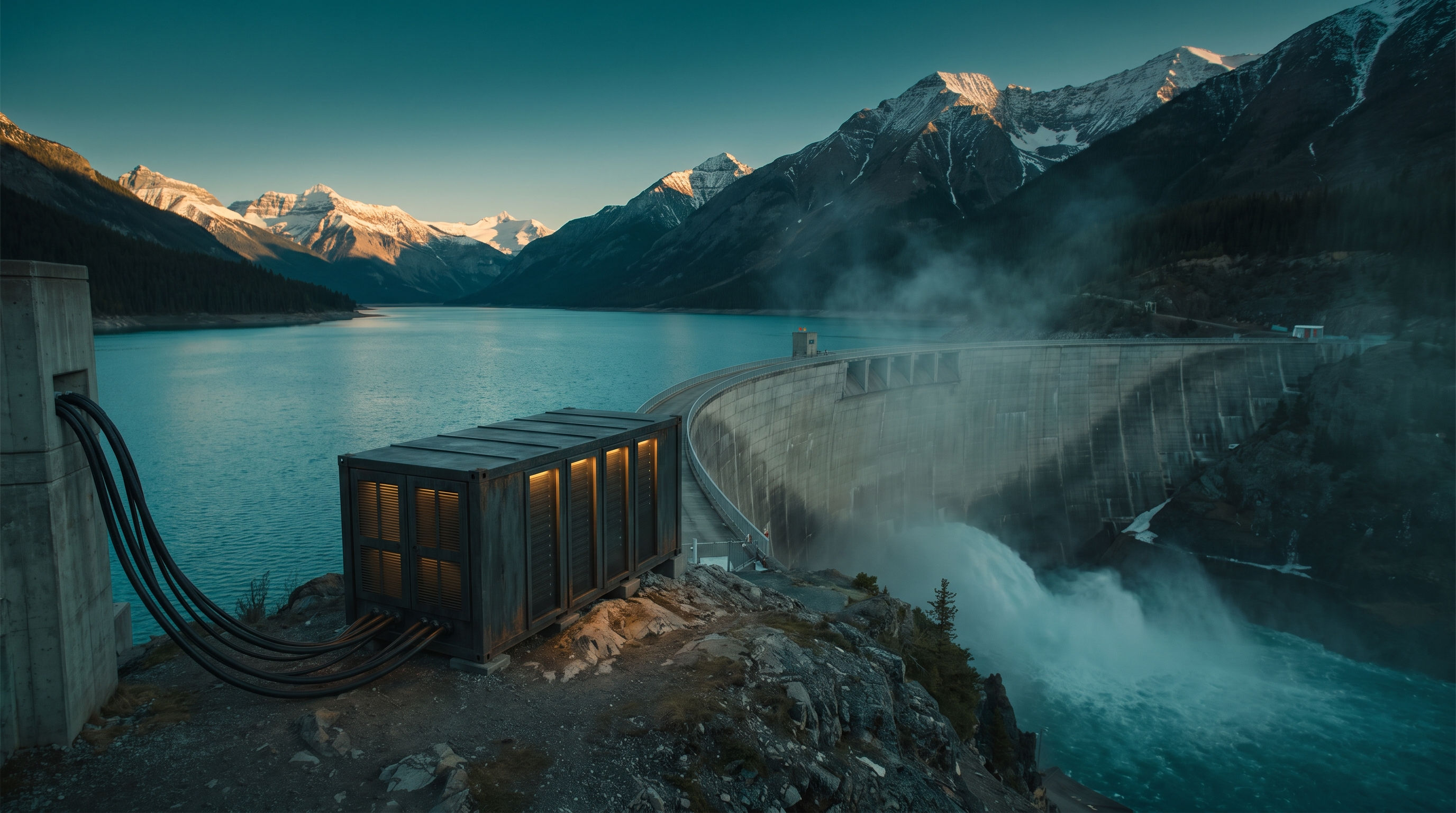
The module arrives racked — servers, power and cooling already inside. Crane it onto the pad, connect power and fibre. No steel, no construction crew: the data center is delivered, not built.
On arrival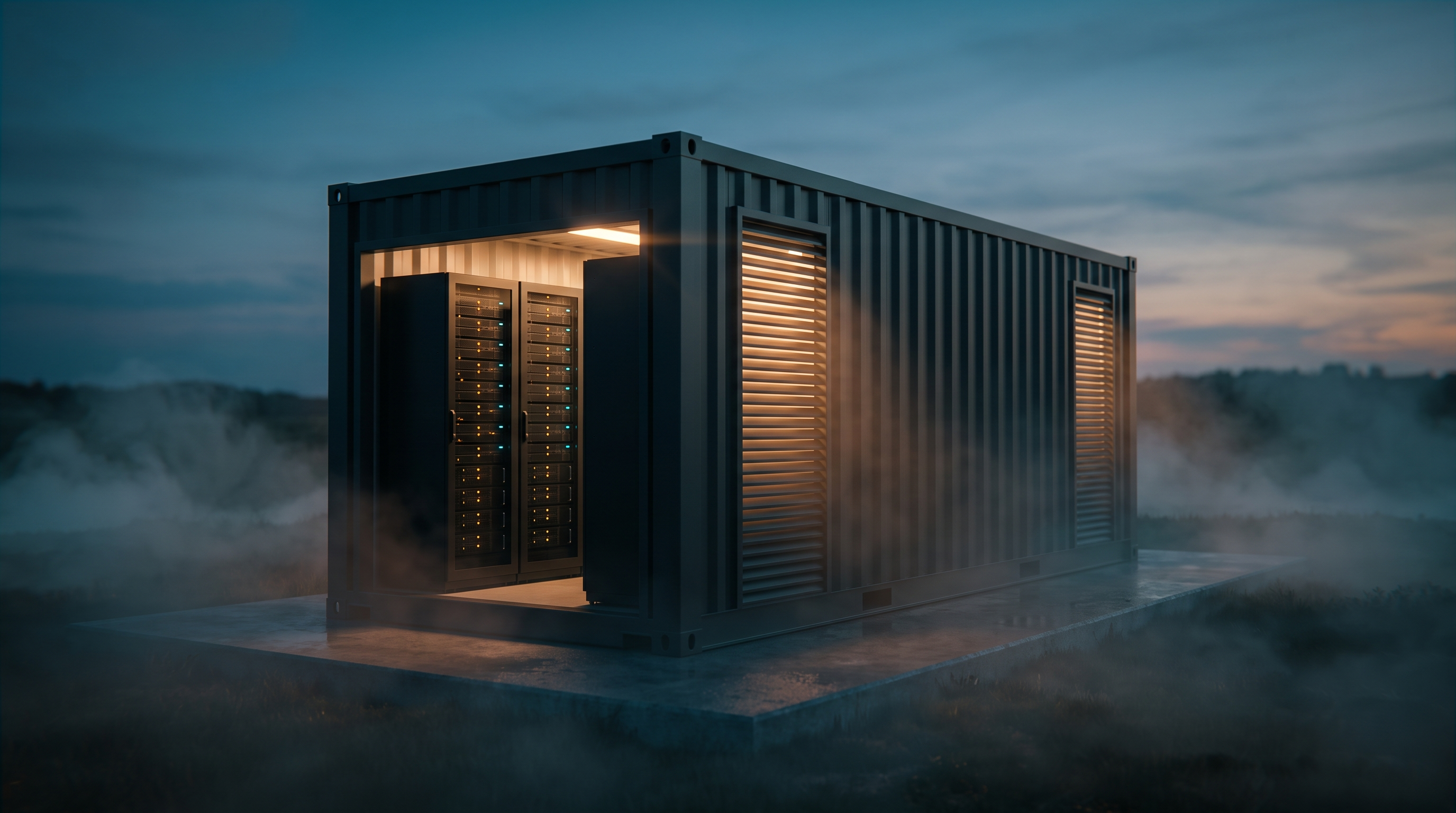
The Cell joins the Mesh and announces itself. Workloads begin routing to it within hours, and residency rules pin them to the jurisdiction you chose. One more node on the fabric.
Hours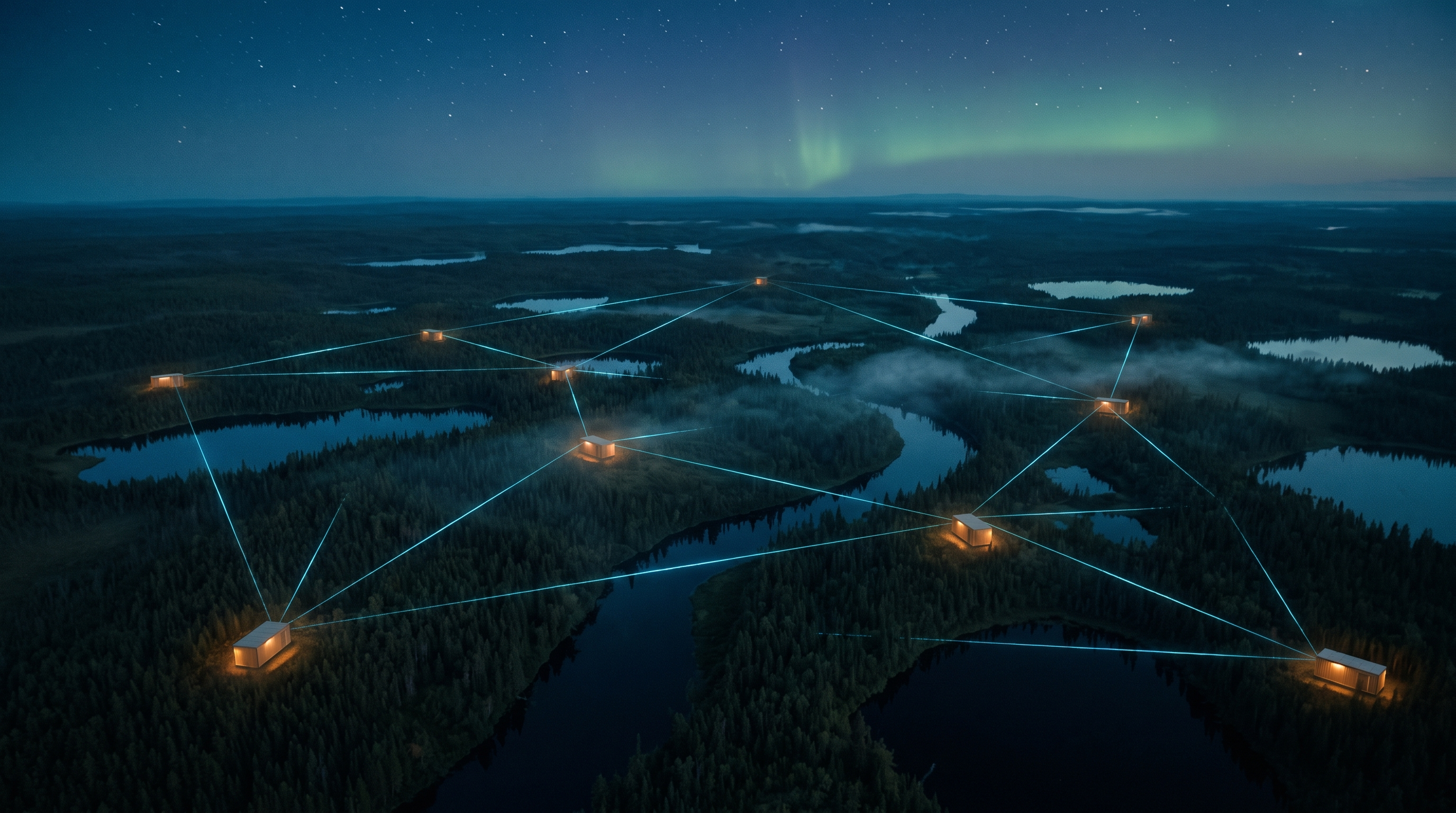
The Autonomy Engine takes the floor — balancing load, tuning cooling, easing wear so hardware lasts longer. From here it runs efficiently and unattended under your policy, at a 99.9% autonomous target.
Unattended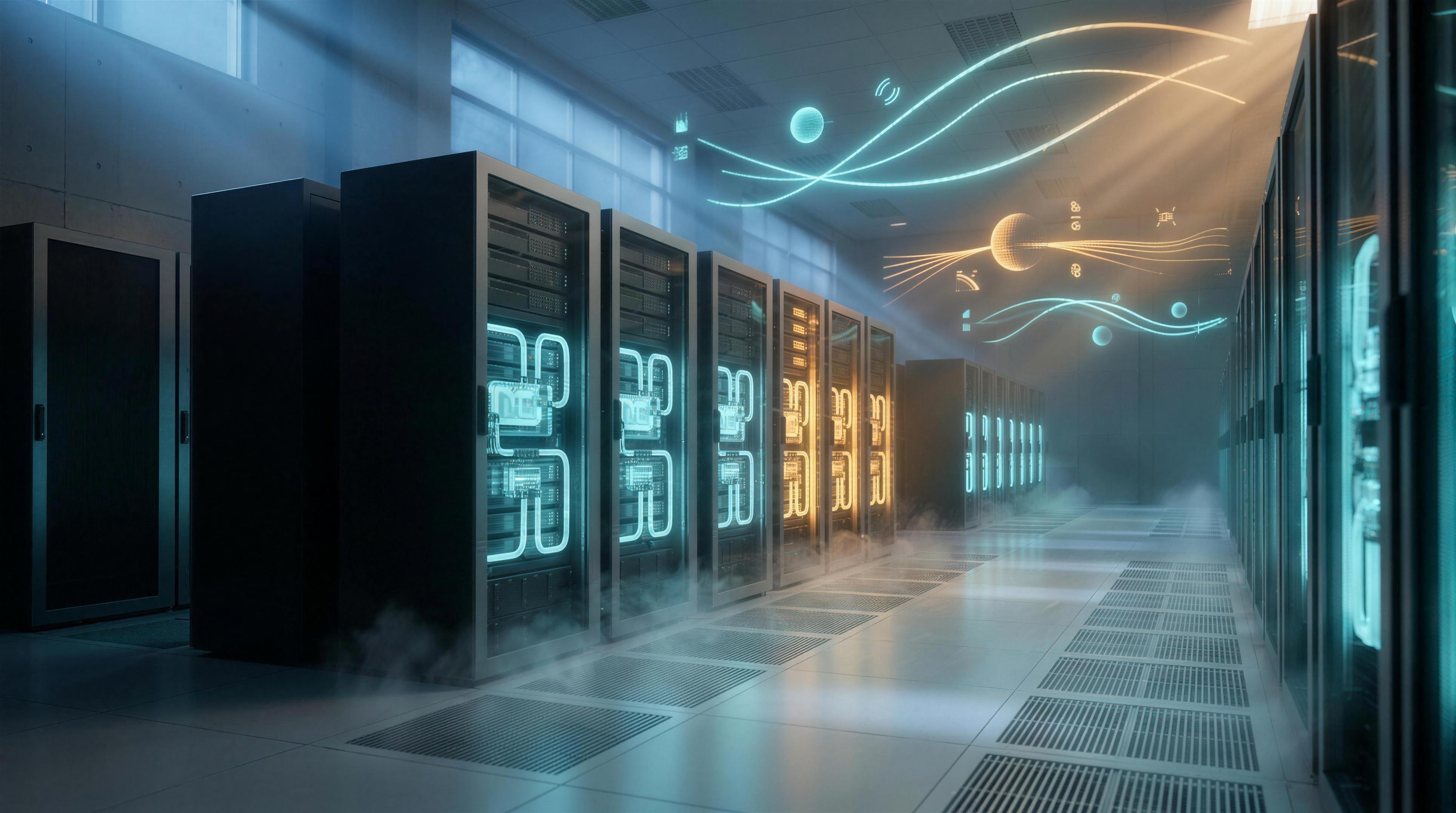
Need more? Drop another Cell. The grid grows node by node, each live in days, until one pod has become a sovereign constellation across the country.
Node by node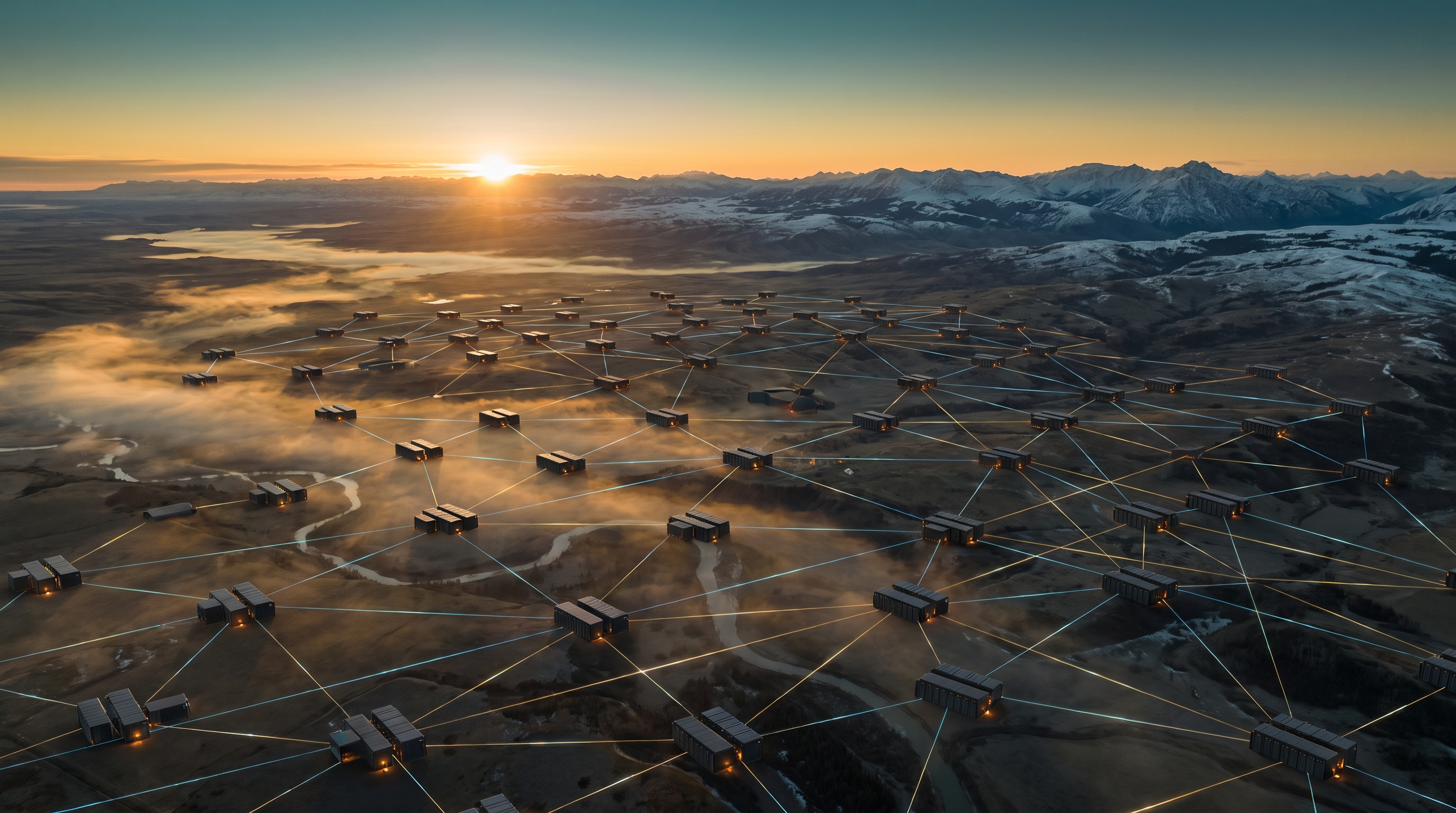
From pad to live compute in days, not years. Racked on arrival, self-configuring on power-up — the wait was the only thing we removed.
A 99.9% autonomous target: the floor self-balances, self-cools and self-heals; humans set intent and hold the override. Autonomous cooling control has already cut data-center cooling energy 40% in production (Google DeepMind, 2016).
Each Cell draws 5–20 MW — small enough to site near power and the work, distributed enough that no single region is a bottleneck.
Every node on Canadian ground — SOC 2 Type II and ISO 27001 aligned, zero-trust. Your data never leaves the jurisdiction you chose.
A Cell is general-purpose compute, but it earns its place on the loads that punish a distant, shared region hardest — the latency-bound, the bursty, the regulated, and the ravenous.
Models that must answer in milliseconds, at the edge, beside the users they serve. Inference is on track to become the majority of all AI compute — and it rewards being close.
Recommendation / search / agents · real-time APIsStand a block of GPU up for a run and release it when it's done. Burst capacity near your data, without a multi-year commitment to a hyperscale region.
Fine-tunes · experiments · scheduled retrainsThe hungriest inference workload there is — GPU-bound and bursty, with video generation drawing orders of magnitude more compute than a still. The AI-media market is compounding ~41% a year; it needs regional, sovereign capacity to run on.
Image · video · audio gen · the Higgsfield-class loadFinance, health, energy, public sector — compute that can't cross a border. Single-tenant, air-gap-optional capacity on Canadian ground, autonomously operated by a lean team.
Regulated data · on-soil AI · national workloadsNot just the compute — the software on it. Our sister studio EliteMicro builds autonomous, AI-native B2B apps that run directly on this grid, next to your data, operated by the same Engine that runs the floor.
Sister studio · elitemicro.caInference-majority forecast: McKinsey & Deloitte, 2025–2026. Generative-media growth: Grand View Research, 2026. Third-party category figures, attributed; workload fit is EliteMicro Services'.
Yes — under human command. The Autonomy Engine executes routine operations (load balancing, cooling, scaling, incident response) at a 99.9% autonomous target, always inside the policy and guardrails you set, with a human override on every action. Autonomy removes the toil, not the accountability.
A Cell is a 5–20 MW modular pod, not a gigawatt campus. It's prefabricated, sited beside existing power, and live in days instead of the multi-year permit-and-construct cycle a hyperscale region needs. Many small, decentralized sites beat a few giant ones for latency, residency and resilience.
On Canadian ground, in the region you choose. Residency rules pin your workloads to that jurisdiction across the Mesh, and your data never leaves it. Single-tenant and air-gapped options are available on the Sovereign tier.
Zero-trust by default, SOC 2 Type II and ISO 27001 aligned, end-to-end encryption. The Sovereign tier adds private single-tenant capacity and optional air-gap for regulated enterprise and public-sector workloads.
Latency-sensitive AI inference, burst GPU and training, and private enterprise compute — including generative-AI media pipelines that need sovereign, regional capacity close to the work.
It starts with a siting review. Once we've matched your workload to power and fibre, a Cell is racked on arrival and live in days. Request access and we'll come back with a capacity plan within two business days.
Each Cell is in the 5–20 MW class — the practical unit of the AI build-out, small enough to site near existing power. Cooling is free-air plus a closed liquid loop, with waste heat recaptured; on Canadian ground, a cold climate delivers free cooling for much of the year, and the grid runs about 85% non-emitting. New efficient builds target a PUE well under the flat 1.56 industry average.
Both, as a system. The Cell is a prefabricated, factory-tested modular facility; the Autonomy Engine is the software control plane that runs it. You can take a single Cell, a Mesh of them, or the Engine over your own footprint — the layers are separable.
We're honest about stage: EliteMicro Services is in build, with capacity opening across Canada. The category numbers on this site are attributed to their sources; our own figures are stated as engineering targets, not delivered results. Request a siting review and we'll tell you exactly what's available, where, and when.
That's the intent for the Engine layer — a control plane that can take the floor of your existing sites under your policy, with the same human-in-command guardrails. Bring it to a siting review and we'll scope the fit.